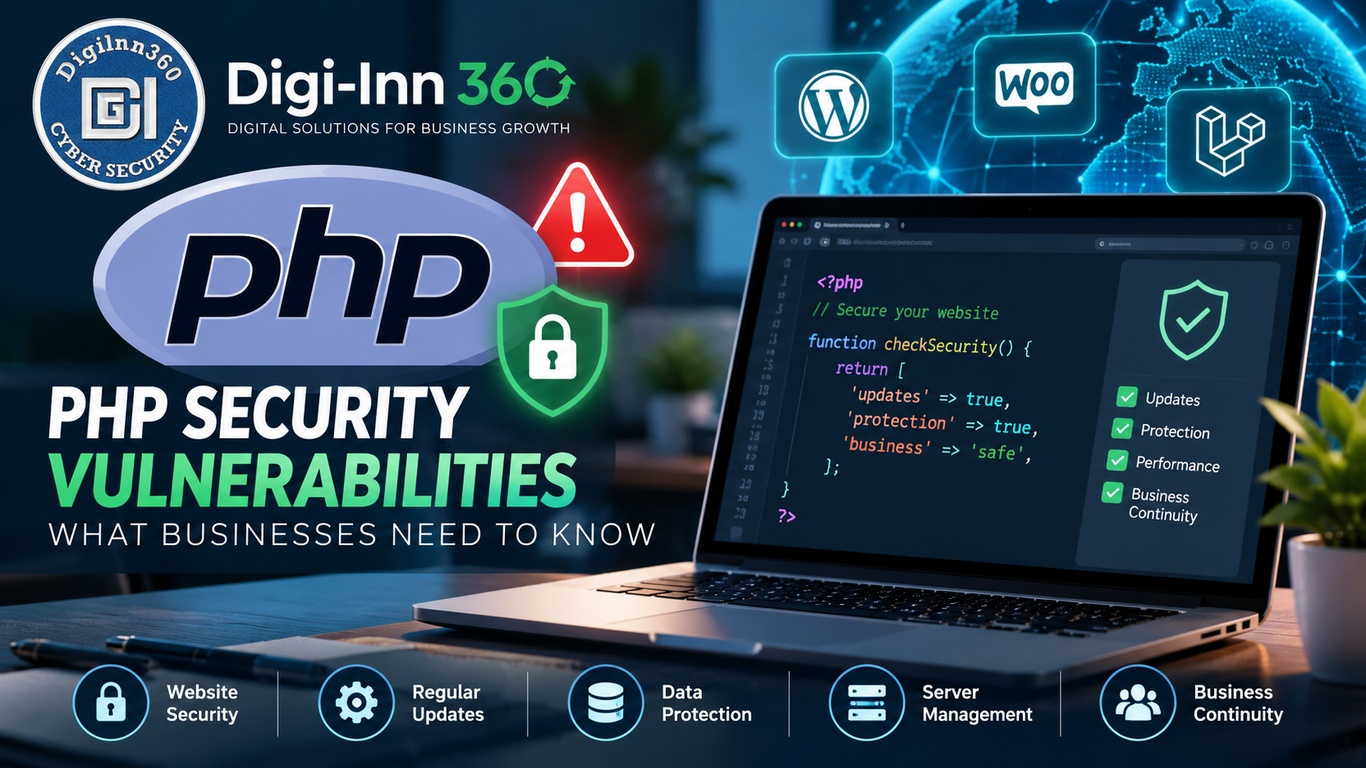
PHP Security Vulnerabilities in October 2026: What Businesses Need to Know
Category: Cybersecurity | Published: 25 October 2026
PHP powers millions of websites and applications around the world. From online stores to business management systems, it works quietly behind the scenes, helping businesses serve customers every day.
But recent PHP security concerns have reminded businesses of something important: even a website that looks modern and works perfectly can have security risks underneath.
In October 2026, critical vulnerabilities affecting PHP attracted attention across the cybersecurity industry, raising concerns about website security, customer information and business continuity.
So, what happened, why does it matter, and what should businesses do?
What Happened to PHP?
During October 2026, security issues were reported in PHP, the programming language used by popular platforms such as WordPress, WooCommerce and Laravel.
These issues highlighted the possibility of attackers exploiting vulnerable server configurations or software versions.
Depending on the vulnerability and how a website is configured, the consequences could include unauthorised access, service disruption or exposure of sensitive information.
Not every PHP-powered website is automatically vulnerable. The level of risk depends on the installed PHP version, server configuration and application environment.
Why Should Business Owners Care?
Most business owners do not know which programming language powers their websites.
They simply expect their websites to work.
But imagine an online store becoming unavailable during a busy sales period, or a business website exposing customer information because its server software was outdated.
These problems can affect more than technology.
They can lead to lost sales, additional recovery expenses and reduced customer confidence.
For businesses that depend on their websites to generate enquiries and process transactions, website security is directly connected to business performance.
How Does This Affect WordPress and WooCommerce?
WordPress and WooCommerce rely on PHP to operate.
This means businesses using these platforms should pay attention to PHP security updates, even if their plugins and themes are already updated.
There is an important difference between updating WordPress and updating PHP.
WordPress updates improve the website's content management system, while PHP updates address the underlying programming environment.
Both matter.
A website can have the latest WordPress version but still run an outdated PHP release.
Business owners should ask their hosting providers or developers to confirm that the server uses a supported, properly maintained PHP version.
What About Laravel and Custom Business Applications?
PHP is also widely used for custom software development.
Laravel, for example, is a popular PHP framework used to build business dashboards, customer portals, booking systems and other web applications.
Businesses running these systems should review their PHP versions, dependencies and server configurations regularly.
A custom application may contain valuable business information, making security maintenance particularly important.
Updating PHP should also involve compatibility testing to ensure the application continues to operate correctly.
Five Practical Steps Businesses Can Take
1. Check your PHP version
Ask your developer or hosting provider which PHP version your website uses and whether it receives security updates.
2. Keep your website software updated
Maintain WordPress, WooCommerce, Laravel, plugins, themes and other dependencies.
3. Back up important information
Maintain regular backups and test that they can be restored.
4. Review website security
Check administrator access, server permissions, suspicious activity and unnecessary software.
5. Arrange regular maintenance
Security should be an ongoing responsibility, not something businesses think about only after a major incident.
Does This Mean PHP Is No Longer Safe?
No.
PHP remains an important technology for websites and business applications.
Like other programming languages, it receives updates to address security vulnerabilities and improve performance.
The main concern is often not PHP itself, but outdated installations, weak server configurations and websites that are not maintained properly.
With appropriate development practices, supported software versions and regular security reviews, PHP remains a practical choice for many businesses.
How Digi-Inn 360 Helps Businesses Stay Secure
At Digi-Inn 360, we understand that businesses need websites and applications that are reliable, secure and easy to manage.
Our team supports businesses through custom software development, WordPress development, website maintenance, cybersecurity assessments and technical improvements.
Whether you operate an online store, a company website or a custom PHP application, keeping your technology updated is an important part of protecting your business.
We help organisations identify technical weaknesses, improve website performance and plan practical solutions for long-term reliability.
Final Thoughts
The recent PHP security concerns are another reminder that cybersecurity is not just an IT issue.
It is a business responsibility.
A website may look professional on the outside, but the technology behind it still needs regular attention.
Businesses that invest in maintenance, updates and security reviews are better prepared to protect their customers, operations and reputation.
Need help reviewing your website or PHP application?
Contact Digi-Inn 360 to discuss your website security, development or maintenance requirements.
Website: https://digiinn360.com
Email: team@diginn360.com
Disclaimer: This article provides general information about website security and PHP maintenance. The appropriate technical response depends on the software version, hosting environment and application configuration.